Touch In the Real World
A distinction needs to be made between our understanding of touch-related phenomenon in the lab and what we actually know about touch in the real world. We often hear that touch is important to reduce individual and societal stress, and that we miss it when communicating digitally, for instance during the pandemic. The truth is, there is little data available to support these assumptions.
For example, heart rate reductions have been shown during artificial stroking conditions in the lab and a weaker cortisol decrease was shown in tightly controlled lab-based stress tests, but we simply do not have much data from everyday life. Does touch really make people more social? How often do people touch each other? Who do they touch and why? Does it really help them feel more connected and less stressed?
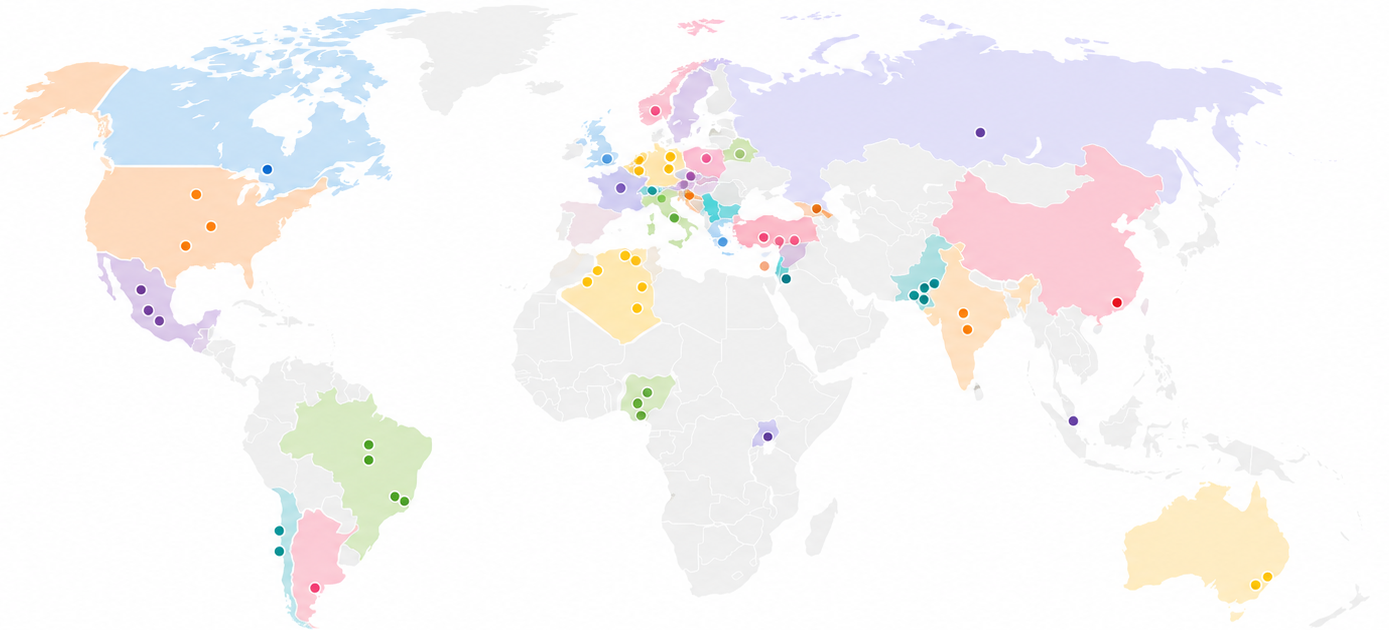
To answer these questions. We are investigating touch in daily life, related to interpersonal factors, context, and the effects of touch. This map illustrates our growing global network, where the highlighted regions represent our current testing sites and the diverse international community participating in our studies. Our goal is to continuously expand this reach to ensure our data on interpersonal touch reflects the variety of human touch experiences across the globe.