How often does touching occur, under what conditions does it have to take place in order to have an effect?
As our society becomes increasingly digital, physical human contact seems to be steadily decreasing – a shift that may have profound implications for our mental and emotional well-being. While there is a lot of laboratory data implying that interpersonal touch effectively reduces stress and supports social bonding, robust real-world data remains surprisingly sparse.
TouchNet is an ambitious research initiative, funded by the European Research Council (ERC). Our mission is to move beyond laboratory settings to capture the spectrum of interpersonal touch in our daily lives. We furthermore aim to bridge the gap between real-world social experiences and the complex neural processes underlying human touch by combining large-scale field studies with state-of-the-art neuroscience.
TouchNet is structured into two major research pillars:
Touch in the Real World
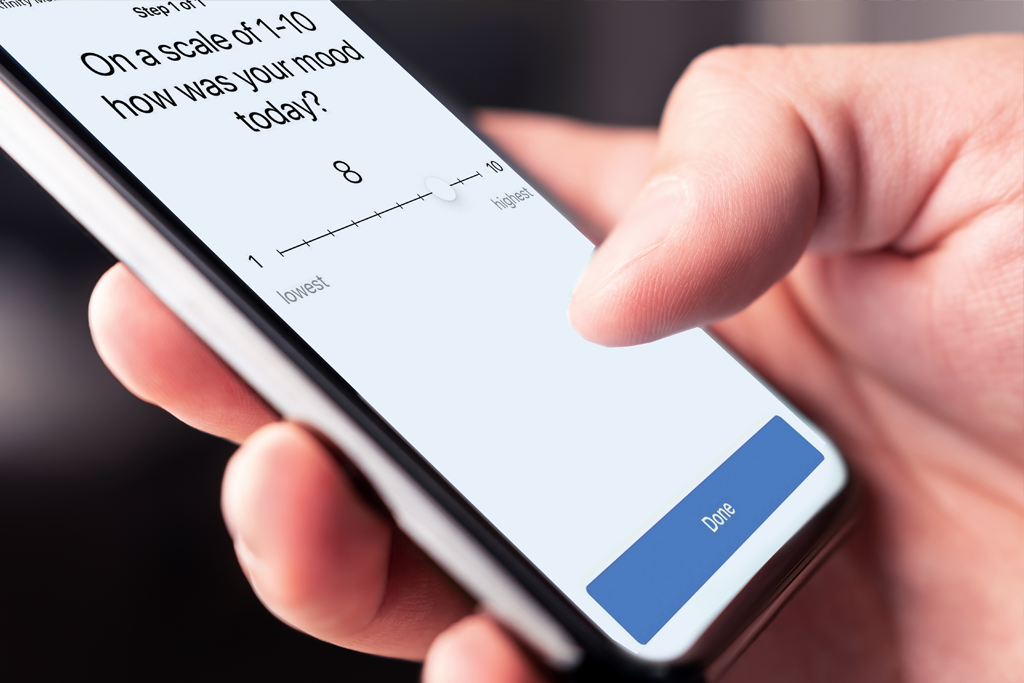
We conduct large-scale field experiments using Ecological Momentary Assessment. People get access to a special App, in which they track the quantity, contexts, and types of touch over a certain amount of time in their daily lives. Our goal is to collect over 100,000 individual touch events to understand how the frequency, context and individual factors influence people’s well-being in everyday life.

The Neural Blueprint of Touch
Using state-of-the-art 3-Tesla and 7-Tesla MRI and fNIRS hyperscanning, we investigate how affective touch activates social and allostatic-interoceptive networks. We aim to identify neural pathways that facilitate social orientation and inter-person synchronization. These studies aim to show how touch modulates the brain’s social and regulatory circuits and how it may literally bring minds into sync.