The Neural Blueprint of Touch
Touch was long thought to be transmitted solely by A-beta fibers, a set of largely myelinated fibers that transmit tactile information to the brain via receptors embedded in the skin. However, this is only part of the story. A specialized set of nerve fibers transmits gentle interpersonal touch: unmyelinated, slowly conducting, low-threshold mechanoreceptive fibers (C-LTMRs). These carry signals from free nerve endings in the skin and are tuned specifically to slow stroking movements, such as a caress. Indeed, because stimulation of these fibers occurs during social contact and leads to a pleasant affect and parasympathetic tuning, it is usually called “social touch” or “affective touch.”
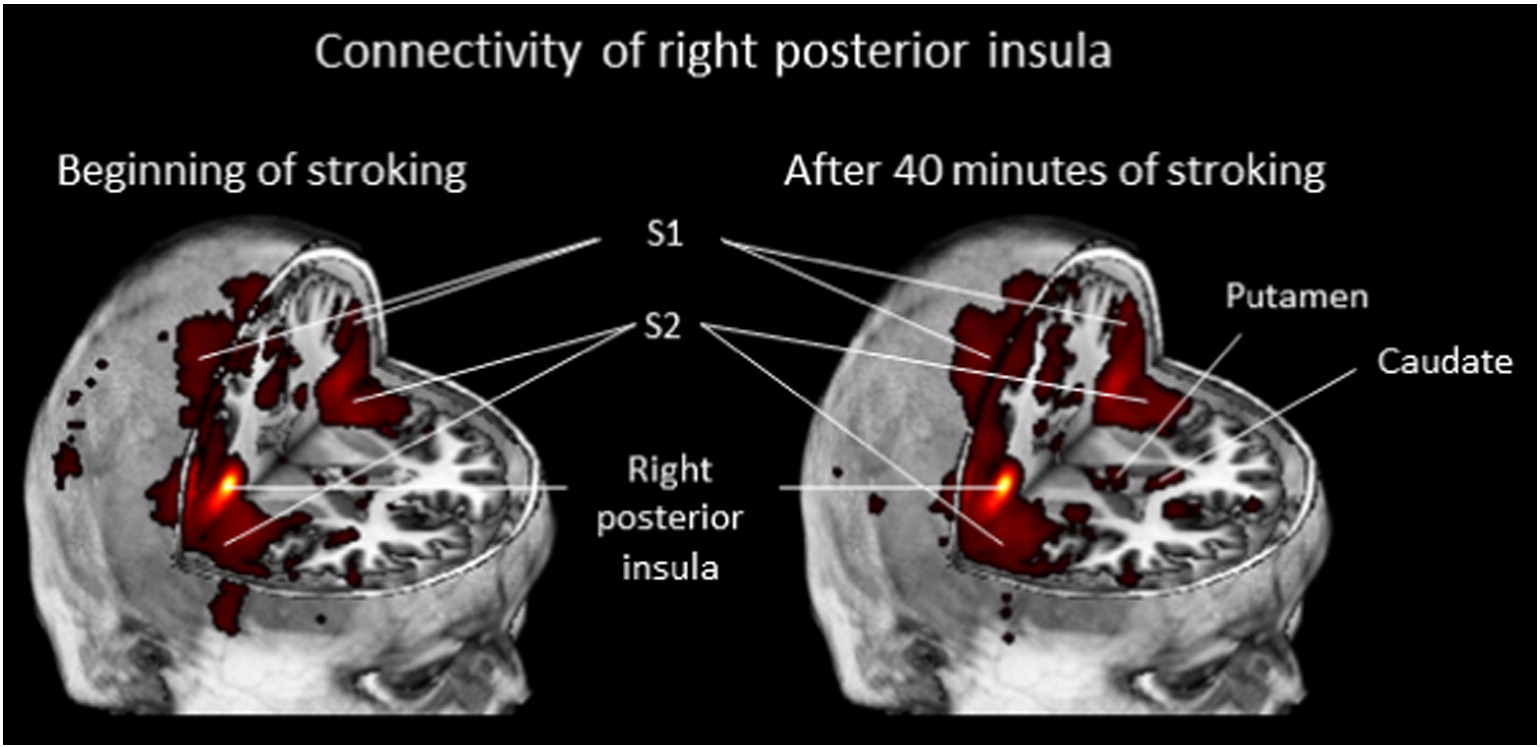
Social touch activates reward and socially related brain networks, and is thought to also impact brain regions related to how the body regulates itself to satisfy a need, a process called allostasis.
We are determined to explore how affective touch influences the newly identified allostatic-interoceptive network in the brain, how it influences the social brain, and its role in social interaction. We will target specific neural mechanism using state-of-the-art imaging facilities and analysis expertise.